

CrewCost vs. Foundation Software
Foundation is a Windows accounting system from 1985, licensed by the user and run on your own server or a hosted desktop. Its users say it doesn't follow the job into the field. CrewCost is cloud construction accounting with the field inside it, for unlimited users, at one price.
| Foundation | CrewCost | |
|---|---|---|
| Built for | The accounting office | The office and the field |
| Job costing | By cost code, keyed in the office | By cost code, from the field to the ledger |
| Where it runs | Windows; your server or Foundation-hosted | Cloud, nothing to host |
| The field | Paper, email, and add-on apps | Built in, any device |
| How it’s priced | Per user, per module, plus onboarding | Flat, unlimited users |
Side by side: what each one does, and where it does it
Foundation does its accounting in the office, on a hosted desktop, keyed in after the fact. CrewCost does it where the cost happens. Read the left column as the workflow you have; the right as the one you would have.
| Foundation | CrewCost | |
|---|---|---|
| Job cost structure | Cost codes and cost types; real construction accounting | Cost codes and cost types, a subledger of the GL |
| When a cost reaches the job | When the office enters it in the right module | Every bill, sub pay app, and payroll run posts by default |
| Committed costs | Tracked through POs and subcontracts | On the budget the day the sub or PO is issued |
| Cost to complete | In reports, maintained by hand | On every budget line, with gain or fade and ECAC |
| WIP / over-under billing | Built in; often exported to Excel for the bonding company | Automatic. Job costs are a subledger of the GL, so WIP ties out |
| Retainage | Tracked | Tracked natively on both sides, through release |
| Payroll | Multi-state, multi-union, certified; a separate paid module | Inside CrewCost; hours by cost code post to the budget with burden, paid by direct deposit |
| Field time & expenses | Paper or a third-party app; mobile is reviewers’ top complaint | Mobile time and expenses built in, unlimited users |
| Accounts payable | Keyed in the office; approvals by email or add-on | AI-powered capture, coding and PM approval from the phone |
| Procore | Marketplace integration for budgets, costs, POs and change orders; no payments | Native two-way sync, payments included |
| Reporting | Hundreds of stock reports; Excel export is a common complaint | Built in, by job, cost code, and period |
| Implementation & users | Onboarding fee from about $5,000; licensed per user and per module | Included; unlimited users |
Built for the back office in 1985. Still there.
Foundation was designed for an accounting department at a desk, and forty years later that is still where it lives. Its own users say so: in independent reviews the most common complaint is mobile, followed by speed and glitches, followed by getting reports out to Excel. Around the software sits the usual bill: a server or a hosted desktop, a licence per user and per module, an onboarding fee, and third-party apps for the field. Three places that shows up:
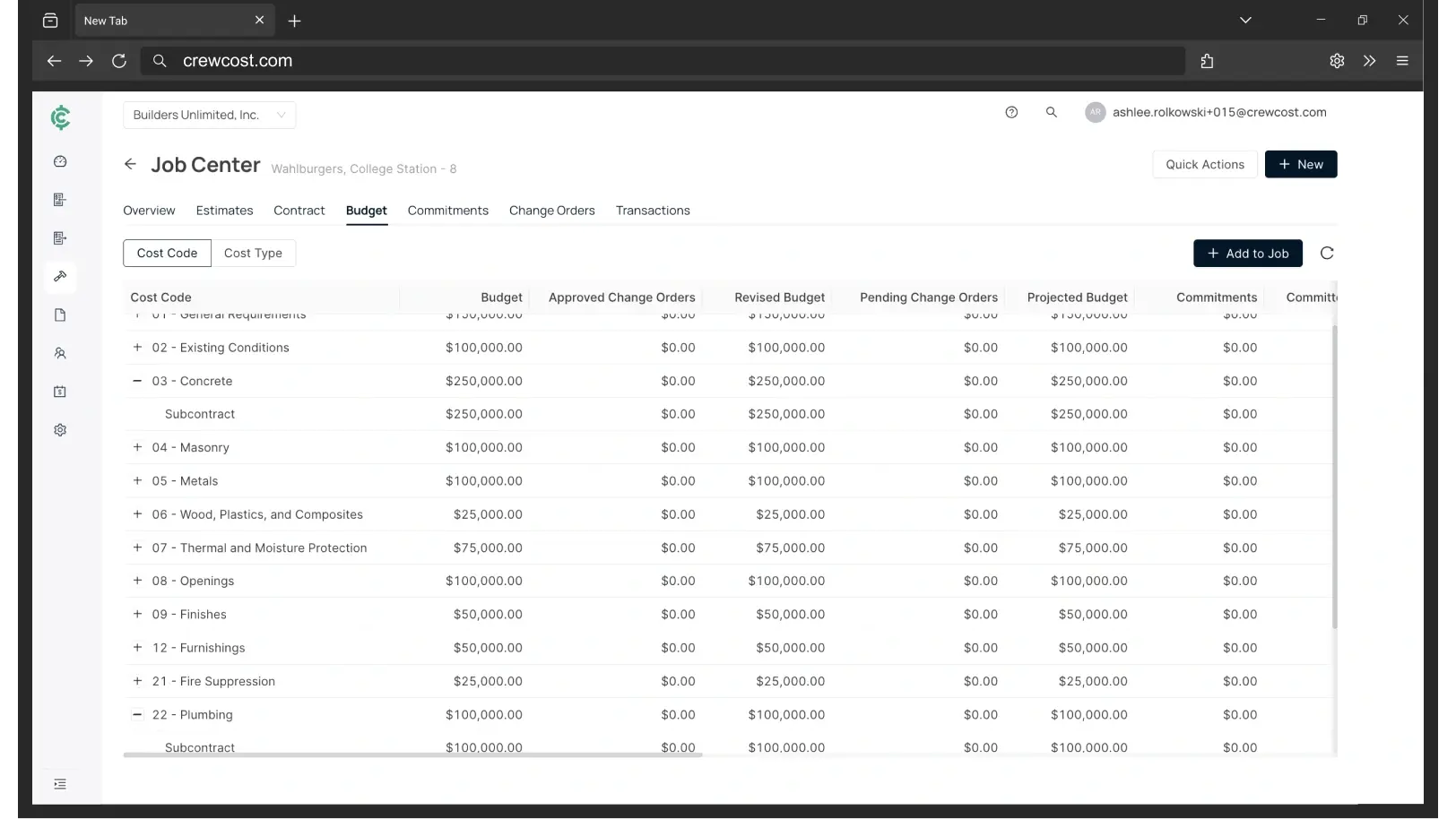
Construction accounting that starts where the cost happens
Foundation is not the expensive option. It is the one with the most lines.
Foundation is not at the Intacct end of the market, but the shape of the bill is the same: licences per user and per module, an onboarding fee, hosting or a server, and add-ons for the field. Every figure below is for the same company: an $8M contractor with 18 employees and four people in the office, before payroll.
“We’re now able to track our labor production against our estimated costs automatically.”
Your three options if Foundation is on the shortlist
Questions contractors ask about Foundation
What does Foundation Software cost?
Foundation doesn’t publish pricing; every quote is custom. Reviewers report entry pricing near $500 a month, and independent estimates for a ten-user contractor run about $15,000 a year in licences plus an onboarding fee starting around $5,000, before hosting. It is licensed per user and per module, so the number grows with every PM who needs access and every module added later. CrewCost is $999 a month for contractors under $10M, unlimited users, implementation included.
Is Foundation cloud-based?
Foundation is a Windows and SQL Server application. You can run it on your own server or in Foundation’s hosted environment, which is the desktop application delivered remotely; Foundation Mobile and the Service Dispatch app cover parts of the field. CrewCost is cloud-native: the same system on any device, nothing to host, patch or upgrade.
We run union and certified payroll in Foundation. Does CrewCost?
Foundation’s payroll module handles union and certified payroll as a separate module. CrewCost Payroll runs inside the accounting system: processing, direct deposit and tax filing in all 50 states, with hours entered by cost code so labor and burden post to the job budget without a second step. If union reporting, prevailing wage or certified payroll are central to your business, raise it on the demo first and we will tell you exactly where we are.
Which is better for a $5 to $25M contractor?
If your office is content to key in the job after the fact and the field will keep working from paper, Foundation will do the accounting. If your PMs and superintendents need the budget in their hands, your crews should enter time by cost code from the job, and your AP should be approved from a phone rather than an inbox, CrewCost was built for that, at a flat price that does not grow with users.
What comes over from Foundation when we switch?
Your chart of accounts, jobs and cost codes, customers, vendors and trial balance, plus open AR and AP. For jobs in flight we bring over the budget by cost code, job-to-date costs, and retainage balances, so you finish the job in CrewCost rather than in two systems. History stays in your Foundation archive. Implementation is included and we do the mapping with you.
We use Procore with Foundation. What changes?
Foundation’s Procore integration syncs budgets, direct costs, change orders, POs and subcontracts from the App Marketplace. CrewCost’s native integration does that and more: jobs, budgets, prime contracts, commitments, subcontractor invoices and direct costs sync between the two systems, vendors and customers stay in sync, and payments flow both ways.
Build confidently.
Bring one of your jobs. We'll show you the budget, the WIP schedule, and retainage tracked through release.